
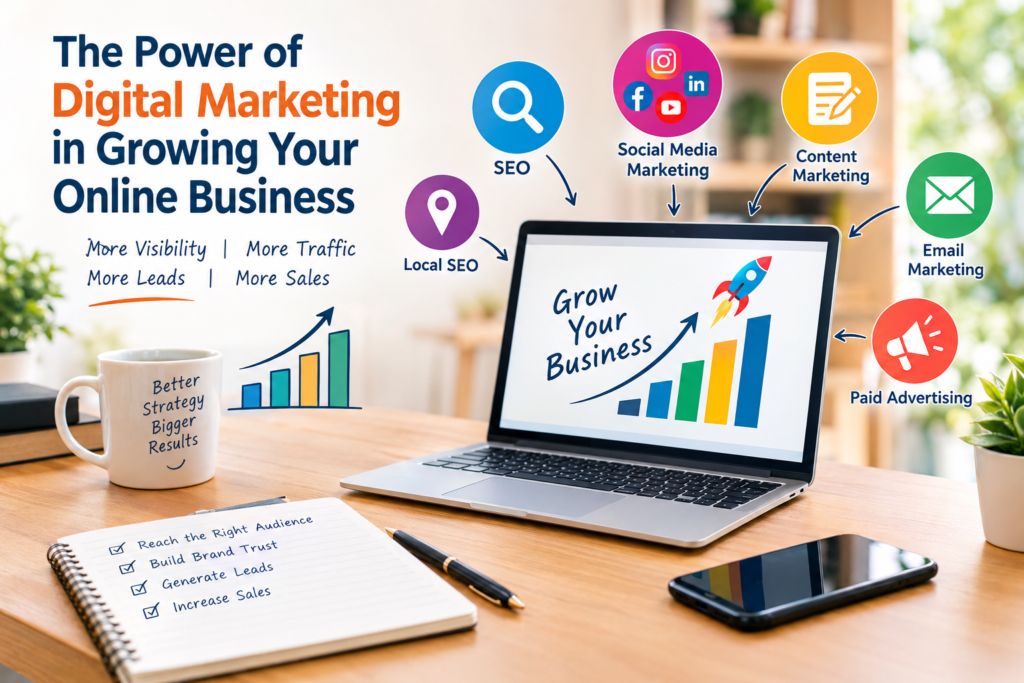
Today, customers spend a significant amount of their time online. They search Google for information, discover brands on social media, watch product videos, read reviews, and compare different options before making a purchase. Because of this change in customer behavior, having a strong online presence has become essential for businesses of all sizes.
This is where digital marketing plays an important role. It helps businesses reach the right audience, promote their products or services, build trust, and generate leads and sales. Whether you are a startup, small business, freelancer, or established company, digital marketing can give you the opportunity to grow without depending only on traditional advertising.
What Is Digital Marketing?
Digital marketing is the process of promoting a business, product, or service through online channels. Instead of reaching customers only through newspapers, television, or outdoor advertisements, businesses can connect with their audience through websites, search engines, social media, email, and online advertising.
Some important digital marketing channels include:
- Search Engine Optimization (SEO)
- Social media marketing
- Content marketing
- Google Ads and PPC
- Email marketing
- Influencer marketing
- Local SEO
Each channel serves a different purpose, but when they work together, they can create a strong online marketing strategy.
Why Digital Marketing Is Important for Business Growth
One of the biggest advantages of digital marketing is that it allows businesses to reach customers where they already spend their time.
For example, someone looking for a digital marketing course may search Google, check social media pages, read reviews, and visit different websites before contacting an institute. If your business appears during these steps, you have a better chance of becoming part of the customer’s decision.
Digital marketing also allows businesses to measure their results. You can see how many people visited your website, interacted with your content, clicked on an advertisement, or completed a purchase.
This makes it easier to understand what is working and where improvements are needed.
SEO Helps Customers Find Your Business
Search Engine Optimization, or SEO, is one of the most effective strategies for long-term online visibility. It helps your website appear in search results when potential customers search for information related to your business.
A strong SEO strategy focuses on creating useful content and providing a good website experience. It includes keyword research, on-page optimization, technical improvements, link building, and local SEO.
Some important SEO activities include:
- Finding relevant keywords
- Optimizing titles and headings
- Creating useful blog content
- Improving website speed
- Making the website mobile-friendly
- Building quality backlinks
- Optimizing for local searches
SEO takes time, but consistent effort can help a business generate organic traffic and reach people who are actively searching for its products or services.
Social Media Builds Brand Awareness
Social media has become an important part of everyday life, making it a valuable platform for businesses. Instagram, Facebook, LinkedIn, YouTube, and other platforms allow brands to communicate directly with their audience.
However, successful social media marketing is not simply about posting advertisements. Customers are more likely to engage with content that is useful, entertaining, educational, or relatable.
A business can share tips, customer stories, behind-the-scenes content, product demonstrations, and industry information to create stronger connections.
Social media can help businesses:
- Increase brand awareness
- Generate leads
- Build customer relationships
- Promote products and services
- Drive traffic to a website
The key is to remain consistent and create content that genuinely interests your audience.
Content Marketing Builds Trust
Content marketing focuses on providing useful information instead of constantly trying to sell something. Blogs, videos, guides, case studies, infographics, and social media posts can all be used as content marketing tools.
For example, a company selling fitness products could publish articles about workout routines, fitness tips, and choosing the right equipment. This type of content can attract people who are interested in fitness and introduce them to the company’s products.
Good content can help a business:
- Answer customer questions
- Improve search visibility
- Build authority
- Attract website visitors
- Generate potential leads
When customers consistently find useful information from your brand, they are more likely to trust your business.
Paid Advertising Can Deliver Faster Visibility
SEO and content marketing are valuable for long-term growth, but businesses may also want faster results. This is where paid advertising can help.
Google Ads and social media advertising allow businesses to reach specific audiences based on factors such as location, interests, demographics, and search intent.
For example, a local business can target people in a specific city, while an online store can promote products to people who are more likely to purchase them.
Successful advertising requires more than simply spending money. Businesses need attractive advertisements, the right audience, a clear offer, and a relevant landing page.
Email Marketing Helps Retain Customers
Getting a new customer is important, but maintaining a relationship with existing customers is equally valuable. Email marketing allows businesses to communicate directly with people who have shown interest in their products or services.
Businesses can use email to share:
- New products
- Special offers
- Useful tips
- Company updates
- Educational content
- Personalized recommendations
The most effective emails provide value rather than sending promotional messages repeatedly. Relevant and useful communication can keep customers connected to your brand.
Digital Marketing Gives Small Businesses an Opportunity
Digital marketing is not only for large companies. Small businesses can also compete effectively by focusing on a specific audience and creating a strong online presence.
A local restaurant, salon, coaching center, real estate business, or service provider can use SEO, social media, customer reviews, and targeted advertising to reach potential customers.
Instead of trying to reach everyone, a small business can focus on a specific group of people who are more likely to need its products or services.
Measure, Learn, and Improve
Digital marketing should never be treated as a one-time activity. Customer behavior changes, competitors introduce new strategies, and online platforms continue to evolve.
Businesses should regularly monitor their performance and make improvements based on data.
You can track:
- Website traffic
- Keyword rankings
- Social media engagement
- Leads
- Conversion rates
- Advertising performance
- Online sales
If a particular strategy is producing good results, you can invest more in it. If something is not working, you can test a different approach.
Conclusion
Digital marketing has become one of the most powerful ways for businesses to grow online. It helps brands reach potential customers, build credibility, increase visibility, and generate leads and sales.
SEO helps customers discover your business, social media creates engagement, content marketing builds trust, paid advertising increases visibility, and email marketing helps maintain customer relationships.
The goal is not to use every digital marketing channel available. Instead, businesses should understand their audience, choose the right strategies, create valuable content, and consistently measure their results.
With the right approach, digital marketing can turn an online presence into a powerful tool for attracting customers and building long-term business growth.